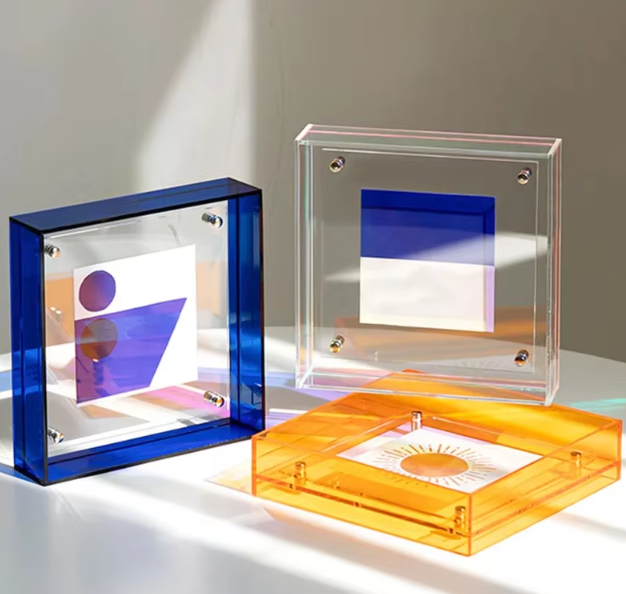
You have finally gotten your hands on the acrylic wall art that you have been waiting to hang on your wall. The excited feeling of seeing your new art piece is accompanied by the fear of not being able to hang it correctly. The last thing you want to do is damage the art piece. It's understandable to have these worries; acrylic is different to hang on the wall when compared to glass or putting up a canvas.
This fear of the damage isn't warranted because putting up acrylic prints is not difficult. Our company works with acrylic wall prints on a daily basis and we have experience putting these prints up on the wall. Our experience ranges from the thinnest of drywall to the most solid of brick. These instructions will make putting up the acrylic wall art a walk in the park.
While it may be tempting to jump into putting up the prints before being fully prepared. It is most efficient to collect everything you want to use to put up the prints before you start.
The first thing you will need is a pencil to make your markings. A simple pencil will do and you want to use a wall-safe pencil to make the measurements. A tape measure is also needed to find the exact spot that you will need your wall art.
Keeping pictures straight. Having everything straight can help.
Right adhesive for the wall. Don't worry, I'll explain.
A wooden stud finder. These are very handy for heavier things.
A microfiber cloth. It is suggested that you give the acrylic a wipe after every time you touch it.
This is the step that is the most important. The wall's material determines the type of hardware. Most of the safety issues come from using the wrong material.
Drywall: Most houses have drywall. For lighter frames, a simple picture hook with a small nail is sufficient. For anything heavier, you need wall anchors. These are plastic tubes that you put into the wall and they expand to grip the drywall. Don't just hammer a nail into drywall, that will be a huge mistake.
Plaster: Many older houses have a plaster wall. These walls are much more brittle, and just hammering a nail in will cause it to crack. For this, a small pilot hole is needed and then anchors that have been made for plaster are necessary.
Common materials used on feature walls include bricks, concrete and tiles. To attach the feature wall, you will require a masonary drill bit and a drill. Drill your hole then install a plastic wall plug, the screw will sit into that. It's very solid.
Studs, on the other hand, are the wooden beams behind your wall. If you can find a stud with your stud finder and align that with a hanging point, then you have the strongest hold possible. You can then screw directly into that.
At this point, you know the spot you want but you have to get it exact. Touching or getting close to it won't do, you have to get it precise.
You have to decide how high you want it. A rule of thumb is to have the centre of the picture sit at eye level, which is roughly 57 to 60 inches from the floor. This can change, and when hanging it above a sofa, you should leave a space between the bottom of the frame and the top of the furniture of 6 to 8 inches. It just looks right.
Let's examine the back of your acrylic print. How does it hang? Is there a wire, or does it have fixed brackets? Measure the distance between the hangers and replicate that distance on your wall. Mark the first hanger location with a pencil. Then use your level to make sure that the second mark is exactly horizontal to the first. Check it twice. Remember, the level is your friend.
Now, the fun part – attaching the brackets to the wall.
One last time, double-check your wall marks with the level. Is it ok?
Now, hang the brackets. If it is a nail-and-hook style, make sure to tap your nail in at a slight downward angle for a better hold. If it is an anchor, that means you will need to drill a hole of the specified size. Once that's done, make sure the anchor is even with the wall and then you can screw the hook or screw into it.
Try not to yank or tug on the hardware too much, otherwise it could come dislodged in the wall.
Now it is time to hang the acrylic print. Use both hands, and be careful not to drop or chip the edges of the acrylic.
Perform the last level check. You can place your level on the side or on top of the frame. Adjust until perfect. Sometimes the piece settles a bit on the hooks.
If your print is on the larger side, a couple extra steps will take you a long way.
Do it with a friend. One can hold the print, while the other steps back to see if it is level. This will cut down on how often you need to go back and forth.
Utilize both hanging points. Most bigger acrylic frames come with two for a purpose. It helps balance the weight so the frame doesn't tilt forward.
If you want to make it child safe, it is possible to use some small security clips on the bottom corners to screw to the frame to keep it flush against the wall. This will keep it from being bumped or knocked off.
Once it is completed and hanging, you want it to stay looking like new. Cleaning acrylic is easy, it just needs to be done properly. Never use ammonia based glass cleaners. They can cause irreversible damage to surfaces.
The easiest way to do this is to take a very soft microfiber cloth, dampen it slightly with water (or a small amount of mild dish soap mixed with water), wipe the surface (do not press), and immediately dry it with a clean dry part of the cloth before water spots form. Never use paper towels or rough sponges because they will cause tiny scratches. With these easy steps, your acrylic will remain clear for years.
Your photo will look great on the wall. With a little strategy, you can do this. You have to know the wall, plan, make sure to measure it, use a level, and the correct hardware. Acrylic is a great material, and because it's not glass, the process becomes a lot safer, and a lot easier. Now, you can hang this beautiful piece and enjoy how great it will look.
 Hot News
Copyright © 2026 by Wenzhou XYBP Cultural Supplies Co., Ltd. - Privacy policy
 EN
EN